An Applied Sciences
course offers students a practical and interdisciplinary education focused on
the application of scientific principles and theories to solve real-world
problems. It encompasses a wide range of scientific disciplines and fields of
study, providing students with the knowledge and skills necessary to address
challenges across various industries and sectors. Key aspects of an Applied
Sciences course include:
1. Interdisciplinary
Curriculum: Applied Sciences courses integrate concepts from
multiple scientific disciplines, including physics, chemistry, biology,
engineering, and environmental science. Students gain a holistic understanding
of scientific principles and their applications in diverse contexts.
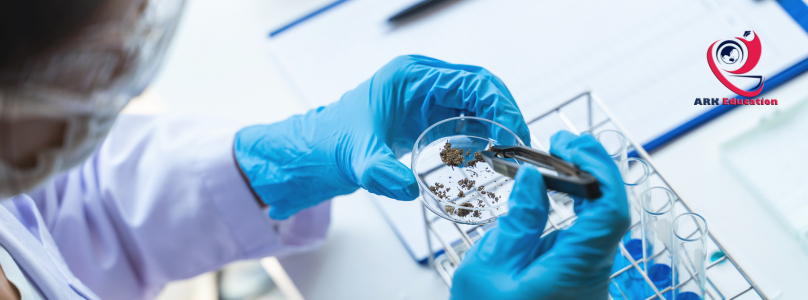
2. Hands-On
Learning: Applied Sciences courses emphasize hands-on,
experiential learning through laboratory experiments, fieldwork, and practical
projects. Students engage in activities such as data collection, analysis,
experimentation, and prototype development, gaining valuable practical skills
and problem-solving abilities.
3. Problem-Based
Approach: Applied Sciences courses focus on solving
real-world problems and addressing practical challenges faced by industries,
communities, and society at large. Students learn how to apply scientific
methods and techniques to identify, analyze, and propose solutions to complex
problems.
4. Specialization Tracks: Applied Sciences
courses often offer specialization tracks or concentrations in specific areas
such as environmental science, biomedical engineering, renewable energy, or
materials science. Students can tailor their coursework to focus on their areas
of interest and expertise within the broader field of applied sciences.
5. Industry
Collaboration: Applied Sciences courses often involve
collaboration with industry partners, research institutions, and government
agencies. Students have opportunities to work on industry-sponsored projects,
internships, and research initiatives, gaining practical experience and
industry insights.
6. Technology
Integration: Applied Sciences courses incorporate the use of
technology and advanced tools for data analysis, modeling, simulation, and
experimentation. Students learn how to use scientific software, laboratory
equipment, and computational tools to conduct research and analysis.
7. Ethical and
Sustainable Practices: Applied Sciences courses address ethical
considerations and sustainability principles in scientific research and
practice. Students learn about ethical guidelines, research integrity, and
responsible innovation, as well as environmental stewardship and sustainable
development practices.
8. Career Preparation: Upon completion of
an Applied Sciences course, graduates can pursue diverse career opportunities
in industries such as biotechnology, pharmaceuticals, healthcare, environmental
consulting, renewable energy, manufacturing, and technology. Applied scientists
play a crucial role in driving innovation, advancing technology, and addressing
global challenges in fields such as healthcare, energy, sustainability, and
environmental conservation.
In summary, an Applied
Sciences course provides students with a practical and interdisciplinary
education that prepares them for careers at the intersection of science,
technology, and industry. By integrating theoretical knowledge with hands-on
experience and problem-solving skills, applied scientists are equipped to make
meaningful contributions to society and address complex challenges in the
modern world.